
Quick Step-By-Step
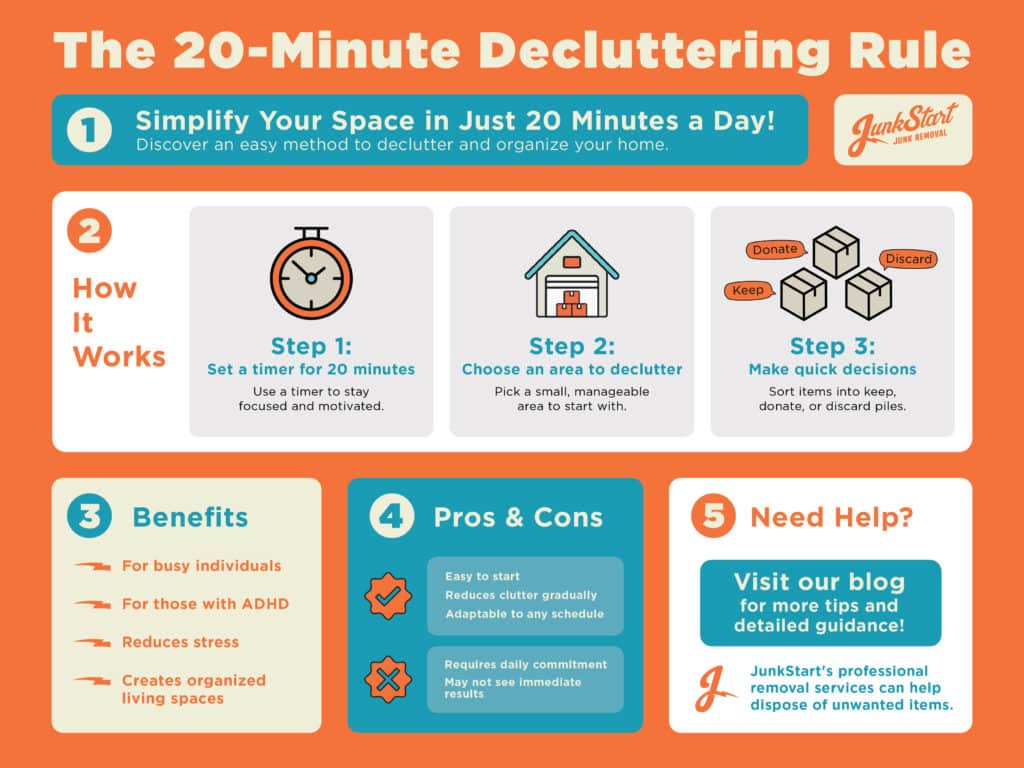
- Set a timer for 20 minutes.
- Pick one specific target.
- Make quick decisions on each item
- Would I notice if it were gone?
- Do I use it frequently?
- When the timer ends, you stop.
Repeat throughout the week to keep making progress on small areas at a time!
Why Decluttering Feels So Overwhelming In The First Place
Most clutter doesn’t come from laziness. It comes from life.
A move that never fully got unpacked. A remodel that left “temporary” piles behind. Furniture you meant to donate. Boxes from a family member’s home that you weren’t emotionally ready to deal with.
At JunkStart Junk Removal, we see this every day in San Antonio homes, especially garages, spare rooms and sheds. Many of these houses were built decades ago, long before people needed space for home offices, workout equipment and online shopping overflow.
The problem isn’t knowing what to do. It’s knowing where to start without feeling instantly defeated.
That’s exactly why the 20-minute decluttering rule works.
What Is The 20-Minute Rule?
The 20-minute decluttering rule is a simple approach: focus on one small area for 20 minutes, then stop. No all-day cleanouts. No pressure to “finish.”
It’s designed to lower the mental barrier to starting, which is usually the hardest part.
Why Short Decluttering Sessions Actually Work
Decluttering isn’t physically hard. It’s mentally exhausting.
Every item requires a decision: keep, donate, toss, move later. Multiply that by hundreds of items and your brain taps out fast. This is called decision fatigue, and it’s why most people quit halfway through.
The 20-minute rule limits how many decisions you have to make at once. You’re borrowing a short window of focus, not committing your entire weekend.
That makes starting feel possible and finishing feel optional.
How the 20-Minute Rule Works In Real Homes
Here’s what this looks like when it’s done right:
- You set a timer for 20 minutes.
- You pick one specific target — not “the garage,” but “the shelf by the lawn tools.”
- You make fast decisions without overthinking.
- When the timer ends, you stop.
In a closet, that might mean clearing one section of hanging clothes.
In a kitchen, one junk drawer or cabinet.
In a bathroom, under the sink.
The rule works because it creates visible progress without draining you.
Where The 20-Minute Rule Starts To Break Down
This is the part most decluttering guides skip.
The rule works great until the clutter gets big, heavy or awkward.
- Garages full of old furniture.
- Appliances that still technically work.
- Renovation debris that doesn’t fit in a trash can.
- Estate items you’re ready to let go of but don’t want to move yourself.
At this stage, decluttering stops being about decisions and starts being about logistics.
This is where many people stall, not because they failed, but because the job changed.
Is The 20-Minute Rule The Same As The 20/20 Rule?
Not exactly, but they pair well together.
The 20-minute rule is about time.
The 20/20 rule is about letting go. If something can be replaced for under $20 in under 20 minutes, it’s usually safe to release it.
Together, they help you decide what should go.
What they don’t solve is how it leaves your property.
That’s the missing step that often keeps clutter hanging around long after decisions are made.
The Most Common Mistake People Make After Decluttering
The biggest mistake isn’t starting too slow. It’s stopping too soon.
People create donation piles with no exit plan.
They stack items neatly in the garage “for now.”
They wait for bulk pickup schedules that keep getting delayed.
Before long, the clutter is back, just more organized.
Decluttering only sticks when the unwanted items actually leave your space.
How JunkStart Helps You Finish What Decluttering Starts
Once you’ve decided what you’re ready to part with, JunkStart helps you close the loop.
We provide residential junk hauling for items that are too big, heavy or inconvenient to deal with on your own. As long as items are non-hazardous and can be safely loaded by a two-person crew, we can usually take care of them.
This is especially helpful after:
- Garage cleanouts
- Pre- or post-move decluttering
- Renovations
- Estate cleanouts
We also offer free estimates, so you can decide your next step without pressure.
Most customers tell us the same thing afterward: “I wish I had done this sooner.”
Want More Decluttering Tips? Check out our Decluttering Guide Blog Series!
- The Decluttering Guide: What Is The 90-90-90 Rule?
- The Decluttering Guide: The Packing Party Method
- The Decluttering Guide: Is The KonMari Method Worth It?
Frequently Asked Questions
Does The 20-Minute Decluttering Rule Really Work?
Yes. It works because it reduces overwhelm and makes starting feel manageable.
How Often Should I Use The 20-Minute Rule?
Many people use it a few times a week. Consistency matters more than intensity.
What Should I Do With Items I’m Getting Rid Of?
Small items can be donated or recycled. Larger items often require professional removal.
Can JunkStart Remove Everything I Declutter?
JunkStart can remove most non-hazardous items that a two-person crew can safely load.
Is Junk Removal Worth It After Decluttering?
For many homeowners, yes. It’s often the fastest way to fully reclaim the space.
Get A Fresh Start With JunkStart
The 20-minute rule helps you get unstuck. JunkStart helps you move forward.
When you’re ready to clear the clutter completely, a free estimate is the easiest next step.